Introduction — Why Mindfulness for Match Preparation Matters
Match day is a pressure cooker. Adrenaline spikes, crowd noise rises, and decisions that take a split second can shape seasons. Physical training builds fitness and skill, but mental readiness decides how you use them. That’s where mindfulness for match preparation comes in — a set of short, practical tools that calm the nervous system, focus attention, and align body and mind for peak performance.
This post gives you match-ready mindfulness routines you can use in the locker room, on the bus, at halftime, and before kick-off. You’ll find breathwork, visualization, movement cues, real player stories, and coach-level implementation tips. Everything is designed to be short, repeatable, and directly applicable to football life.
Real Player Snapshot: Quick Wins From Real Footballers

Liam, Manchester, UK (U21 midfielder)
Liam began a 3-minute centering routine before every training and match. Within a few weeks he noticed less pre-match anxiety and cleaner passing decisions late in games.
Marcus, Seattle, USA (College winger)
Marcus used guided visualization on travel days—imagining exact runs and touch points. The consistency helped him hit sharper timing on away matches.
Both examples show how small, consistent mindfulness habits support match performance.How do football players keep their mind calm?
What Does “Mindfulness for Match Preparation” Actually Mean?
Mindfulness for match preparation is not sitting silently for 30 minutes. It is short, applied mental skills integrated into existing match routines:
- Breath control to regulate arousal (nerves)
- Focus cues to narrow attention to the present moment
- Imagery to prime motor patterns and tactical choices
- Body scans and micro-movement to release tension
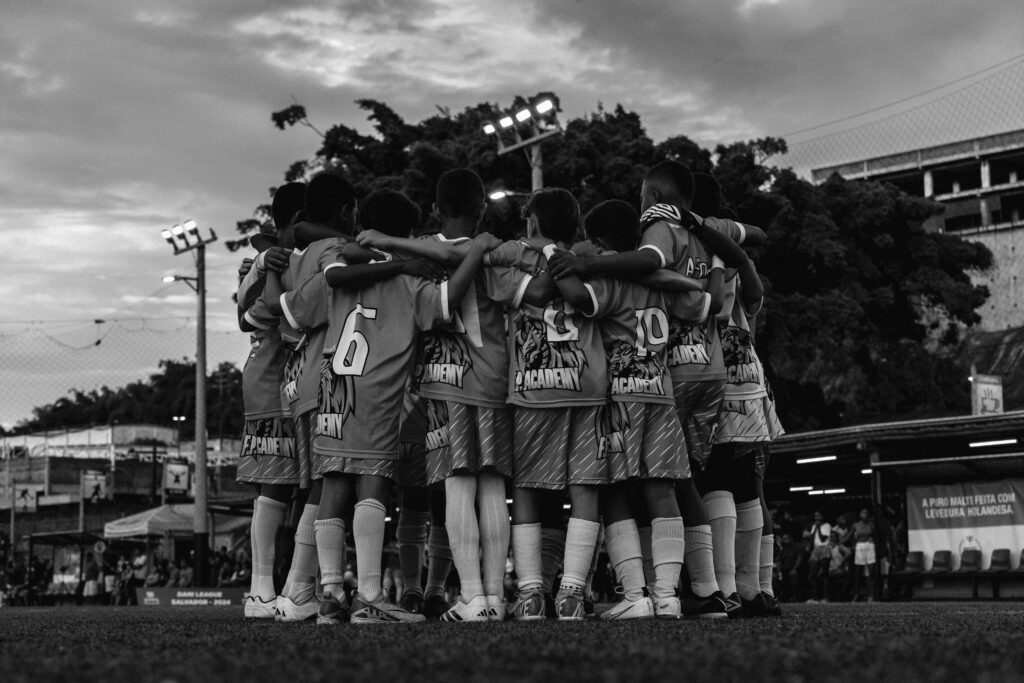
- Team rituals to create shared calm and clarity
These tools are portable, coachable, and compatible with modern team practice.
How do football players recover quickly from injuries?
7 Match-Ready Mindfulness Practices
Each of these is designed to be used in the real timeline of match day — on the bus, in the tunnel, during warm-up, or at half-time.
1. Three-Minute Centering (Pre-Match Locker Room)
Time: 2–3 minutes
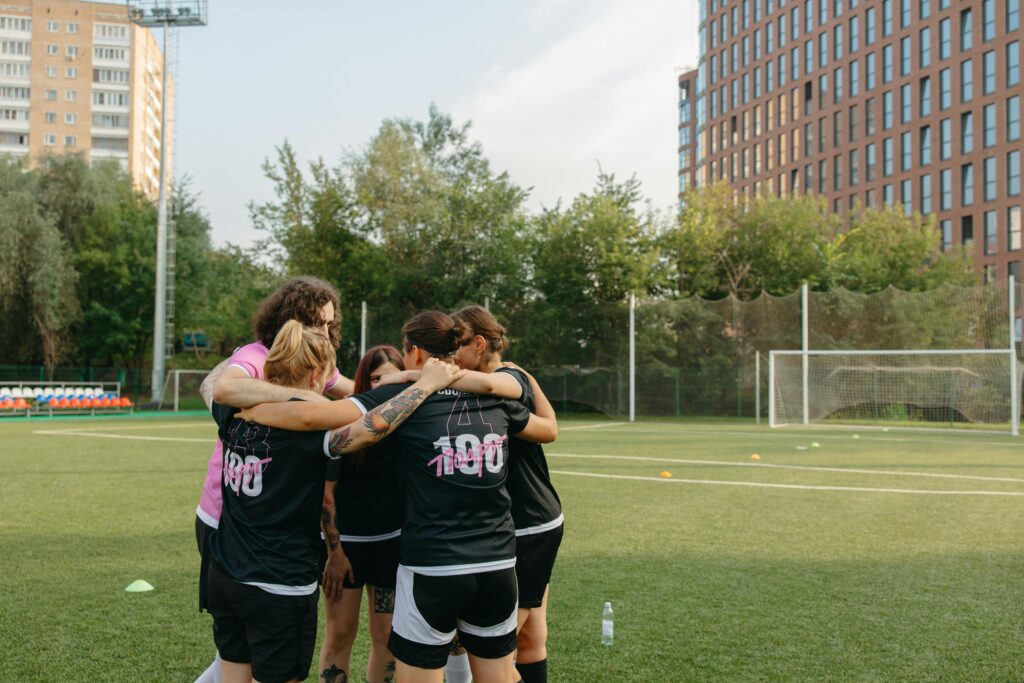
How: Players sit or stand quietly. Guided by captain or staff: inhale 4, hold 2, exhale 6. Focus on the feet touching the ground, chest rising and falling. One team intention is spoken (e.g., “Stay sharp; trust our structure”).
Why: Lowers heart rate, creates collective calm, sets team intention.
2. Two-Second Release (Live, On-Field Reset)
Time: 2 seconds between decisions (dead ball moments)
How: At stoppages, take two slow exhalations before picking the ball up or taking a set piece.
Why: Pauses automatic reactions and reduces rushed errors. How do football strikers concentrate on the game?
3. Focus Cue (Individual Anchor)
Time: Immediate, micro-second anchor
How: Choose one-word cue — “soft,” “space,” “see.” Touch the wrist to trigger the cue, then focus on the next action.
Why: Shrinks attention to the next actionable step instead of the whole game.
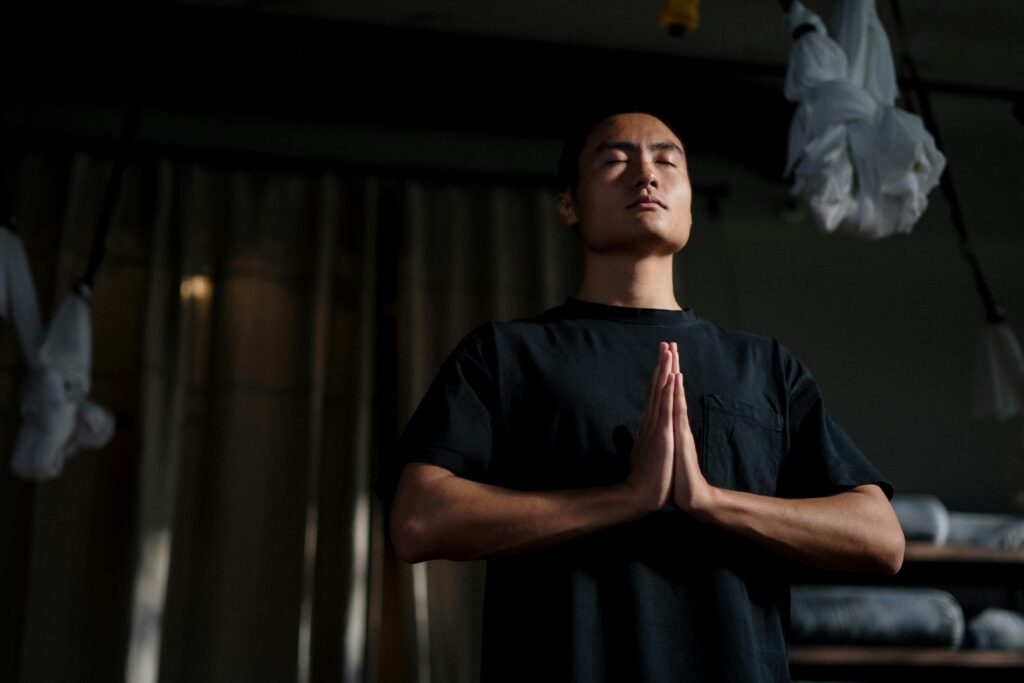
4. Performance Visualization (Pre-Kickoff & Half-Time)
Time: 2–4 minutes
How: Close eyes and visualize one successful sequence: body position, ball flight, teammate movement. Add sensory details—sound of the crowd, feel of the turf.
Why: Primes the neuromuscular system for the exact movements you need.
5. Micro-Body Scan (Between Warm-Up and Kickoff)
Time: 60–90 seconds
How: Quick head-to-toe check: shoulders, jaw, hips, hamstrings — relax any tension. Breathe into tight spots.
Why: Releases physical tension that undermines technique.
6. Re-Center at Half-Time (Team Brief)
Time: 60–90 seconds after tactical talk
How: One minute of breathwork (inhale 4, exhale 6), followed by one short tactical intention from the coach.
Why: Shifts the team from analysis to action—calm clarity for the next 45 minutes.
7. Post-Match Gratitude Circle (Recovery & Team Culture)
Time: 2–3 minutes post-match
How: Each player names one small positive (effort, pass, recovery). No criticism—only constructive next steps.
Why: Stabilizes mood, prevents rumination, and builds collective resilience.
How to Embed Mindfulness into Standard Match Routines
Mindfulness is most effective when normalized. Here’s how coaches and captains can embed it:
- Pre-Training Start: Begin sessions with a 60-second centering drill.
- Warm-Up Integration: Add “one-breath anchors” into technical drills.
- Tactical Breaks: After tactical input, use 30 seconds of breath to settle players.
- Captain Leadership: Captains lead the 3-minute centering pre-match—leadership normalizes practice.
- Measure & Reflect: Ask players for simple subjective metrics—sleep quality, pre-match calm—track weekly.
Small additions create culture change. Mindfulness becomes part of your team identity, not a separate activity.
Real-World Example: How Teams Use Mindfulness
Some professional clubs include mental skills coaching as part of player development. At youth and college levels, coaches who adopt simple, repeatable routines often see immediate buy-in because the practices are short and performance-linked.
Marcus (Seattle) used visualization and breathwork before long trips. It helped manage travel stress and preserved sharpness for match time. Liam (Manchester) used the team centering ritual—his coach reported improved composure from the whole midfield.
Common Concerns & Practical Fixes
“I can’t switch my brain off.”
You’re not trying to stop thinking; you’re training to notice thoughts and return to the present. Think of it as mental reps—start small.
“My coach will think it’s soft.”
Frame it as performance training: better focus equals fewer mistakes—and that’s measurable.
“I don’t have time.”
The whole pre-match centering takes 2–3 minutes. The Two-Second Release literally costs no time and pays off in reduced errors.
Quick Match-Day Checklist: Mindfulness for Match Preparation
- 60–180 minutes pre-match: light nutrition, hydration, and 10-minute mobility
- 30 minutes pre-match: 3-minute team centering + individual visualization
- Warm-up: one-breath anchors during technical drills
- Kickoff: micro-body scan at the tunnel exit
- Half-time: 60–90 second breath reset + tactical intention
- Post-match: 2-3 minute gratitude circle + short body scan
Use this checklist as a template and tweak to your team’s needs.
Q&A — Quick Player Questions
Q: Will mindfulness make me less aggressive?
A: No. Mindfulness enhances emotional control. Aggression becomes tactical and precise, not chaotic.
Click here to know how mindfulness play an important role in your game.
Q: Can goalkeepers use these techniques?
A: Especially goalkeepers. Visualization and breathwork before penalties are high ROI.
Q: How long until I see benefits?
A: Players often feel immediate calm within sessions; consistent performance improvement typically shows in 2–6 weeks.
FAQs — SEO-Friendly Answers
Q1: What is mindfulness for match preparation?
A: Short, actionable mental skills (breathwork, visualization, anchors) used during match routines to improve focus and reduce performance anxiety.
Q2: How long should pre-match mindfulness take?
A: Effective routines are brief—2–5 minutes for centering, 1–2 minutes for visualization, and micro-resets during the game.
Q3: Can teams practice mindfulness together?
A: Yes. Team rituals like centering or gratitude circles boost cohesion and mental readiness.
Coach Implementation Tips (Short & Practical)
- Begin simple: pick one practice (Three-Minute Centering) and do it for two weeks.
- Use a player leader to guide the first minute, then rotate.
- Collect one metric: pre-match calm rating (1–10). See trends across weeks.
- Pair mindfulness with existing performance metrics—running load, pass accuracy—to demonstrate value.
Safety & Professional Note
Mindfulness techniques support performance and wellbeing but are not a substitute for clinical care. Players with severe anxiety or mental health concerns should consult medical professionals and club psychologists.
Final Call to Action (CTA)
Try this tonight: before your next session, take 90 seconds with your teammates for a centering breath and set one team intention. Notice one difference in how the next drill feels. Share the result with your coach or a teammate—small habits build big advantages.
Author Bio
CalmWithinMinutes Team — practical, athlete-focused mindfulness guidance combining sports science and field-tested routines for players, coaches, and teams in the USA, UK, and beyond.
Pingback: Mindfulness for Youth Football Players: Focus, Fun & Faster Development - Calm Within Minutes