Introduction — Why mindful nutrition matters on and off the pitch
Fitness, skill and tactics win games — but nutrition decides how well you deliver them. Mindful nutrition for footballers means being intentional about what, when, and how you eat so energy, focus and recovery are optimized.
This isn’t about fad diets or strict rules. It’s about simple, repeatable habits: the right carbs at the right time, protein to repair, hydration that actually works, and snack strategies for travel days. When players add mindfulness to nutrition — noticing hunger, energy, and digestion — performance and recovery improve without extra complication.
Below: practical plans for training days, matchdays, travel, and recovery, plus quick recipes and coach-friendly tips.
Real-life snapshots — simple changes, measurable results
Ethan — Manchester, UK (youth midfielder)
Ethan used to skip breakfast before early training, then crash mid-session. After switching to a 300–400 kcal pre-training combo (banana + yogurt + small oats pot) and tracking how he felt, his repeated sprints and focus in small-sided games improved noticeably within two weeks.
Sara — Portland, USA (college winger)
Sara found travel days ruined her appetite and energy. She began packing a simple travel kit: peanut butter sandwich, fruit, electrolyte drink, and a protein bar. With a small, mindful pre-match meal on arrival, her second-half stamina improved across away fixtures.
Core principles of mindful nutrition for footballers
- Timing beats perfection: When you eat matters as much as what you eat.
- Carbs for fuel, protein for repair: Prioritize carbs before/during long exertion and protein after.
- Hydrate proactively: Start hydrated — replace sweat losses intelligently.
- Mindful portions: Notice how food makes you feel (heavy, light, focused) and adjust.
- Consistency wins: Reproducible routines beat occasional extreme measures.
Matchday fueling — a practical timeline
48–24 hours before (topping up glycogen)
- Favor whole-grain pasta, rice, potatoes, and fruit.
- Keep protein moderate (chicken, fish, beans) and add vegetables.
- Avoid excessive fibre/fat in main pre-match meals to reduce gut upset.
3–4 hours before kick-off (main pre-match meal)
- Aim for a balanced, moderate meal: ~60–90g carbs + ~20–30g protein + small fat.
- Example: chicken + rice + roasted veg, or pasta with lean protein and light sauce.
60–90 minutes before kick-off (small top-up)
- Easily-digested carbs: banana, white bread with honey, sports drink — keep it light and familiar.
During the match / halftime
- For matches longer than 60–75 minutes or hot conditions: small sips of electrolyte drink; if halftime allows, half a banana or a small carbohydrate gel (preferred by some pros).
- Avoid large volumes of heavy food at halftime.
Post-match (within 30–60 minutes)
- Recovery window: 1–1.2g carbs/kg + 20–30g protein depending on workload.
- Example: chocolate milk + sandwich, yogurt + fruit + granola, or a protein shake + banana.
Training day vs rest day: simple rules

- Training day (moderate-high load): higher carbs across meals, protein at every meal, hydrate proactively.
- Rest/recovery day: lower carbs but keep protein steady to support repair; focus on nutrient quality and sleep-supporting meals in the evening.
A sample day for a heavy training day (male ~75kg):
- Breakfast: oats + milk + banana + nuts (30–40g carbs, 15–20g protein)
- Mid-morning: fruit or yogurt
- Lunch (pre-afternoon training): chicken + rice + veg (60–80g carbs)
- Pre-training: small carb top-up (banana)
- Post-training: recovery shake or chocolate milk + sandwich
- Dinner: salmon + sweet potato + greens (protein + carbs)
Adjust portions for youth players or lighter-weight athletes.
Hydration: beyond “drink water”
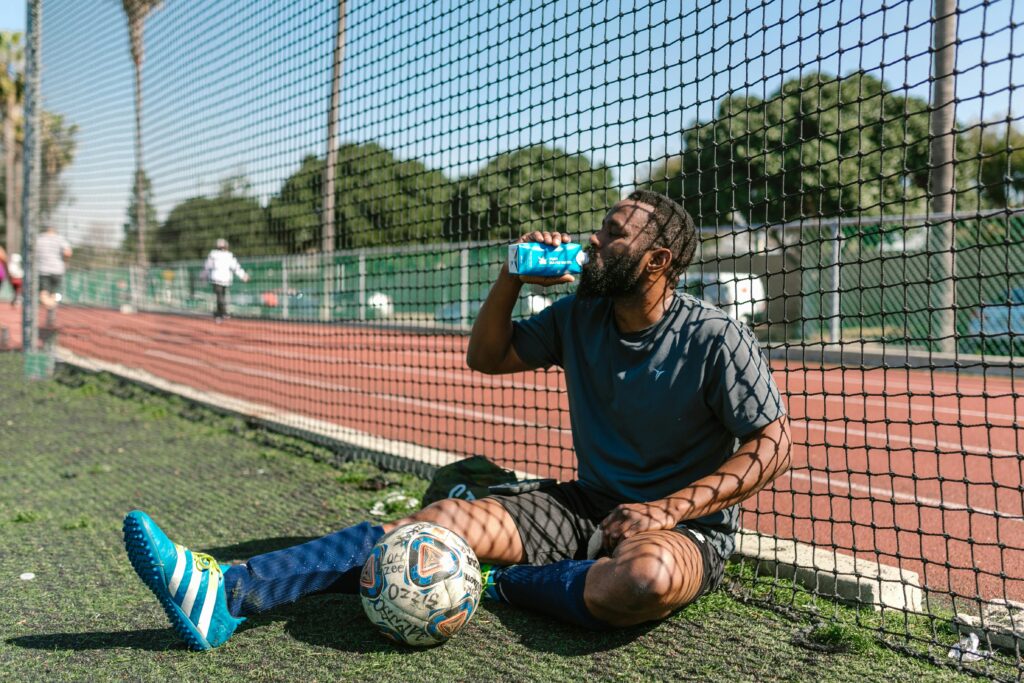
- Weigh-in method: Best practical check — weigh before and after training/match. Aim for <2% body mass loss. Each 0.5 kg lost ≈ 500 ml fluid to replace.
- Electrolytes: In long sessions or hot weather, include electrolyte drinks to replace sodium losses.
- Practical habit: Start each day with ~300–500 ml water and sip regularly rather than gulping large amounts at once.
Travel & tournament day strategies
- Pack a travel kit: easy sandwiches, a serving of fruit, mixed nuts, a sports drink, and a protein bar. Click here to buy this football bag under budget.
- Eat at consistent times relative to kick-off, not local meal norms — keep your internal timing stable.
- If flights are involved, choose meals with moderate carbs and lower fat to avoid bloating; hydrate well and move every 90 minutes.
Quick, coachable snack ideas (easy to pack)
- Banana + peanut butter on white bread
- Yogurt + honey + small granola pot
- Rice cakes + honey + sliced turkey
- Chocolate milk (good carb:protein ratio)
- Dried fruit + mixed nuts (small portion)
- Electrolyte sachet mixed in water (for long/hot days)
Supplements: what’s sensible (and what to avoid)
- Useful: Creatine (for power/pacing athletes, if under guidance), basic vitamin D (if deficient), protein powder for convenience. Consult a nutritionist/GP before starting.
- Be cautious: Fat burners, unverified pre-workouts, or high-dose herbal supplements—check with club medic to avoid banned substances and side effects.
Mindfulness tips that change eating behavior
- Eat with attention: Even 60 seconds of focusing on your meal (smell, texture, taste) reduces overeating and improves digestion.
- Pre-meal check-in: Ask: “How hungry am I?” Rate 1–5 and eat accordingly.
- Post-meal log: Keep a short note for 3–7 days on how meals made you feel during training — adjust what’s heavy or light for you.
Quick 3-day mini-plan for players (practical)
Day 1 (heavy training):
- Breakfast: oats + milk + banana
- Lunch: rice + chicken + veg
- Pre-training: banana
- Post-training: chocolate milk + sandwich
Day 2 (light training / recovery):
- Breakfast: eggs + toast + fruit
- Lunch: salad bowl with quinoa + chickpeas
- Snacks: yogurt, nuts
- Dinner: fish + sweet potato + veg
Day 3 (match day): Follow the matchday timeline above — main meal 3–4 hours pre-match, small top-up 60–90 minutes before, recovery meal within 30–60 minutes after.
Coach implementation: keep it simple & habitual
- Pick 2 habits to start: e.g., players bring travel kits, and the team uses a standard 3-hour pre-match meal.
- Make it routine: same meal windows for all players when possible.
- Education: brief 10–15 minute team talks on why timing matters more than a strict menu.
- Monitor: encourage player journals for 7 days on perceived energy and recovery; adjust.
FAQs (quick)
Q: Should I cut carbs to lose weight?
A: Not on heavy training days. If weight management is needed, do it under nutritionist guidance and reduce carbs on rest days, not before matches.
Q: Is fasting OK for footballers?
A: Time-restricted eating can work for some, but avoid fasting on match/training days. Always trial in the off-season or light training to assess effects.
Q: How much protein do I need?
A: Rough practical rule: 1.2–1.8 g/kg/day depending on load—spread across meals. Younger players and those in heavy phases need the higher end.
Read below to more related Articles:-
Mindful Recovery for Footballers
- Pre-Season Mindfulness Routine for Footballers
- Mindfulness for Youth Football Players
- Mindful Recovery Routines
Safety & professional note
This guide gives practical, general advice. For individualized plans (medical conditions, food allergies, significant weight changes, anti-doping rules), consult the club nutritionist, GP, or a registered sports dietitian.
Author Bio & Tags
Written by the CalmWithinMinutes Team — practical, athlete-focused nutrition and mindfulness guidance combining field-tested tips and sports science.