
Introduction — Why Mindfulness for Youth Football Players Matters Now
Youth football today is demanding. Early specialization, travel, school pressures, and social media all add layers of stress to a young player’s life. Coaches want skill, parents want progress, and kids—too often—lose the simple joy of playing.
That’s where mindfulness for youth football players comes in: short, age-appropriate practices that help players focus in training, manage nerves before games, recover better after sessions, and stay emotionally resilient. Importantly, these tools make learning easier and the game more fun.
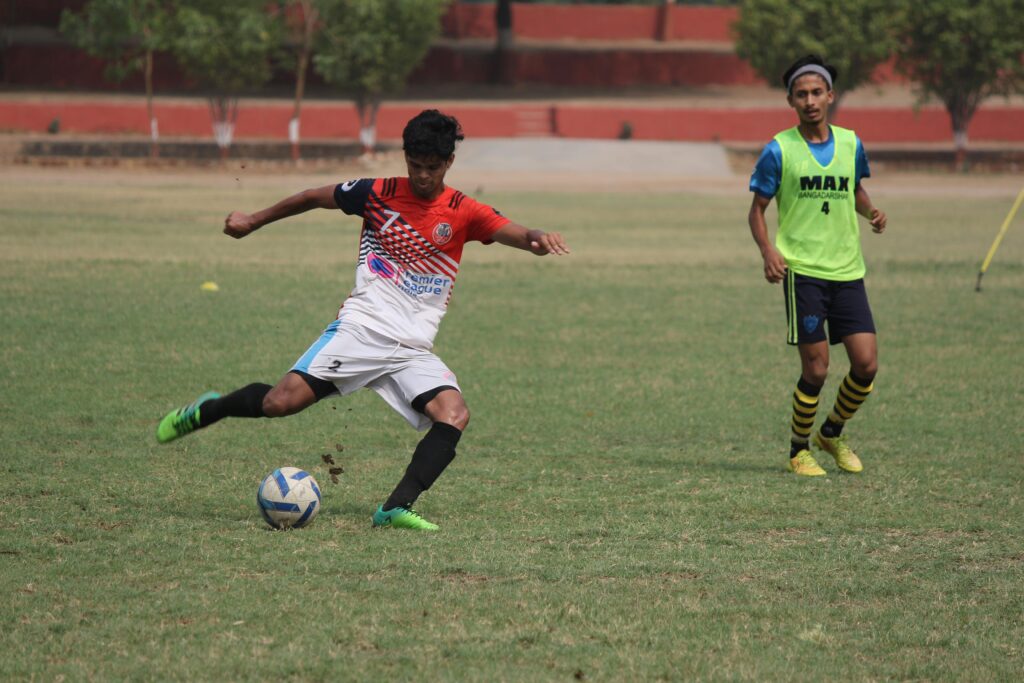
This article is a practical guide for players (U10–U18), parents, and coaches who want to add simple, evidence-backed mindfulness practices into weekly youth development without creating extra burden.
Real Youth Stories: What Works on the Ground
Oliver — 12, Liverpool Academy (UK)
Oliver struggled to listen during tactical drills—his mind would wander and he missed key instructions. His coach introduced a 60-second “feet on the floor” centering before every session. Within weeks Oliver’s coach reported clearer attention and fewer repetitions needed for a drill.
Maya — 15, High School & Club Player, Boston (USA)
Maya used to panic before penalty shootouts in school tournaments. A sports psychologist taught her a 90-second visualization and breathing routine. She still felt nervous, but she no longer froze—her penalty accuracy improved and she enjoyed the experience more.
These stories show that mindfulness for youth football players doesn’t remove pressure—rather, it helps players handle it while staying engaged.
What Is Mindfulness for Youth Football Players? (Simple & Practical)
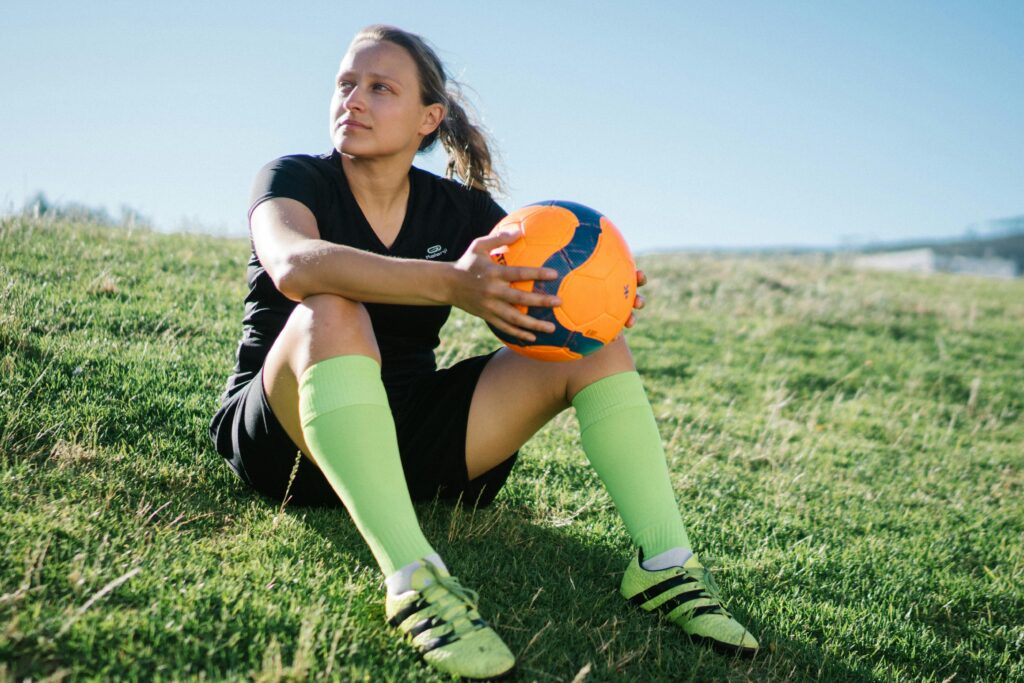
For youth players, mindfulness means short, guided activities that:
- Teach attention control (focus on the next action)
- Build body awareness (notice tension, release it)
- Create emotional regulation (calm under pressure)
- Strengthen recovery habits (sleep, post-training routines)
It is not long silent meditation. It’s 30-second to 3-minute routines integrated into warm-ups, breaks, and post-match reviews—age appropriate and coachable.
How to calm yourself down before a football match?
8 Simple Mindfulness Practices for Youth Football Players
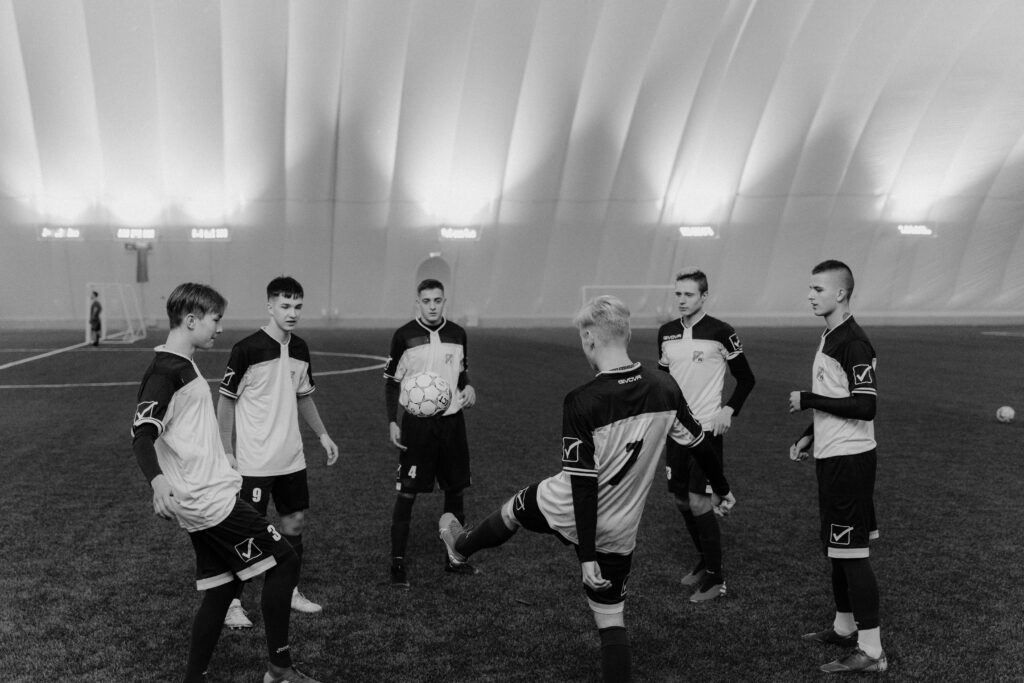
Below are kid-friendly, coach-approved practices. Time estimates help you fit them into sessions.
1. Feet-On-The-Floor Centering (30–60 seconds) — U10–U14
How: Players stand with feet hip-width, eyes open or closed. One slow breath in, one slow breath out. Coach says: “Feel the ground. One intention for training.”
Why: Creates a quick attention switch and signals the brain that training is starting.
2. The One-Question Game (30 seconds) — U12+
How: Before a drill, players ask themselves: “What is one thing I want to do well in this next 5 minutes?”
Why: Focuses attention on a single, achievable target—reduces overwhelm.
3. Two-Minute Visualisation (2 minutes) — U14+
How: Eyes closed, imagine receiving a pass, control, and making the perfect next action. Add sensory detail: the sound of the crowd, feel of the ball.
Why: Primes motor patterns and reduces pre-match anxiety.
4. Breath Buddy (60 seconds) — U8–U12
How: Pair up. One player breathes in/out slowly while the partner watches chest rise/fall. Swap.
Why: Teaches basic breath awareness in a social, playful way.
5. Micro-Body Scan (60–90 seconds) — U13+
How: Lie or sit, scan feet to head; soften jaw and shoulders. Coach guides.
Why: Releases tension before matches or after hard training.
6. Gratitude Circle (90 seconds) — All ages
How: After training, each player says one good thing they did or saw. Short and positive.
Why: Encourages growth mindset and team cohesion.
7. “One Breath” Trigger (instant) — All ages
How: Teach a single, quiet inhale–exhale cue to use before penalties or high-pressure moments.
Why: Quick arousal regulation when the game is intense.
8. Nightly “Skill Replay” (3 minutes, at home) — U14+
How: Before sleep, players visualize practicing one new skill correctly. Short and positive.
Why: Supports learning consolidation and reduces pre-match worry.
How can football strikers focused on their game?
How Coaches Can Teach Mindfulness for Youth Football Players
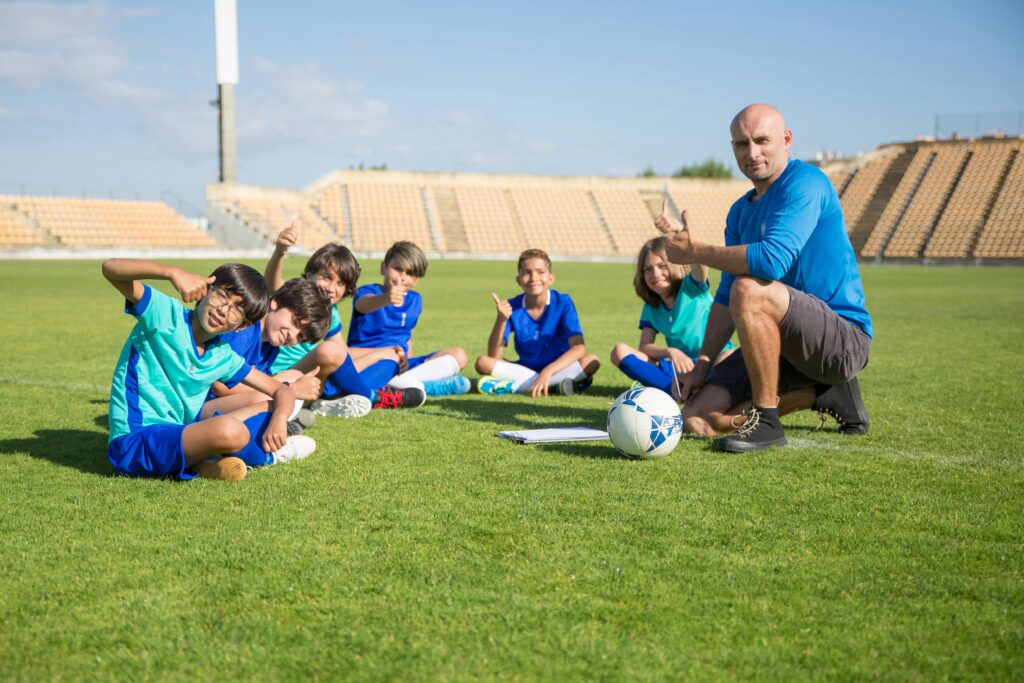
Coaches need simple, repeatable, low-time practices that slot seamlessly into session plans. Here’s a practical rollout:
- Week 1 — Introduce One Practice: Start with Feet-On-The-Floor Centering before warm-ups. Keep it 30–45 seconds.
- Week 2 — Add a Breath Tool: Teach the One Breath Trigger and practice it once per session.
- Week 3 — Introduce Gratitude Circle: End sessions with a short positive sharing.
- Ongoing — Rotate Practices: Add visualization for older groups and micro-body scans after heavy sessions.
Coach tip: Model it yourself. If the coach leads quietly for 30 seconds, players follow. Use consistent language—call the practice the same name each time.
How can footballers recover quickly from their injuries?
Click here to know 4 Key roles of Coaches in Developing Young Football Talents.
Parents’ Guide: Supporting Mindfulness at Home
Parents play a big role in normalizing mindfulness.
- Keep it simple: Ask about the one goal of the day instead of quizzing on every detail.
- Encourage sleep routines: A simple pre-sleep skill replay helps learning and reduces anxiety.
- Avoid pressuring after mistakes: Use the Gratitude Circle language at home: “Name one good thing from today.”
- Model calm: Kids learn emotion regulation by watching adults.
Note for parents: mindfulness is not therapy. If your child shows signs of severe anxiety or depression, seek professional help.
Age-Specific Sample Session: U12 (30-minute plan)
- 0–3 min: Feet-On-The-Floor Centering + team intention
- 3–10 min: Warm-up drills (one-breath anchor between reps)
- 10–20 min: Technical session (One-Question before each drill)
- 20–28 min: Small-sided game (use “One Breath” before set plays)
- 28–30 min: Gratitude Circle + brief coach feedback
This shows how mindfulness for youth football players integrates into normal session flow with no time cost.
Evidence & Why This Helps
- Short mindfulness practices improve attention and emotional regulation in children and adolescents (multiple school-based studies).
- Visualization and mental rehearsal support skill learning in youth athletes (sports psychology literature).
- Group rituals (like gratitude circles) enhance team cohesion and positive motivation in youth sports contexts.
(When publishing, link to a reputable source like a university research summary, NHS youth mental health resources, or a sports psychology review.)
Common Questions from Coaches & Parents (Q&A)
Q: Will mindfulness make kids too calm to compete?
A: No. Mindfulness helps regulate arousal so players can channel energy effectively. It refines aggression into game-appropriate intensity.
Q: How long until we see benefits?
A: Often within 2–4 weeks of consistent, brief practice. Improvements in attention and reduced pre-match nerves are commonly reported.
Q: Is this appropriate for very young players (U8)?
A: Yes—use playful versions (Breath Buddy, short sensory games) and keep it under 60 seconds.
Q: My club is busy—how do we adopt this?
A: Start with one practice per session for 4 weeks. Track subjective calm and attention with a simple “how focused” 1–5 rating from players.
FAQs (SEO-Friendly)
Q1: What is mindfulness for youth football players?
A: It’s a set of short, coachable attention and body practices that help young players focus, manage nerves, and enjoy the game more.
Q2: Can mindfulness help reduce performance anxiety in youth matches?
A: Yes. Breathing and visualization techniques reduce immediate arousal and improve composure during pressure moments.
Q3: Does mindfulness require a trained psychologist?
A: No. Coaches can deliver basic practices with short scripts. Serious mental health concerns should always be referred to professionals.
Q4: How can clubs measure impact?
A: Use simple before/after surveys (focus rating, sleep quality), coach observations on drill efficiency, and player self-reports after matches.
Safety & Professional Note
Mindfulness practices are supportive tools for focus and well-being. They don’t replace professional mental health care. If a child shows persistent anxiety, depression, or behavioral changes, seek advice from a qualified child psychologist, school counselor, or medical professional.
For youth under 16, obtain parental consent before starting any regular mental skills training and inform parents about the short, developmental nature of the practices.
Coach & Club Implementation Checklist (Quick Start)
- Pick one practice (Feet-On-The-Floor) and use it before every session for 4 weeks
- Train 1–2 coaches on the short scripts (2–3 minutes max)
- Collect simple metrics (player focus 1–5) weekly
- Add gratitude circle as end-of-session habit after 2 weeks
- Share one parent update per month about the program and invite feedback
Short 7-Day Starter Plan for Players & Parents (CTA)
Day 1: Feet-On-The-Floor Centering before practice
Day 2: Breath Buddy in warm-up (pair activity)
Day 3: One-Question Game during drills
Day 4: 60-second Micro-Body Scan post-practice
Day 5: Gratitude Circle after session
Day 6: Nightly Skill Replay (2 minutes) at home
Day 7: Weekly review with coach/parent—what worked?
Call to Action: Try the 7-day starter this week with your team. Share one small win (e.g., “Oliver stayed focused in practice!”) and watch momentum build.
Author Bio
Written by the CalmWithinMinutes Team — we help young athletes, coaches, and parents use short, research-backed mindfulness practices to improve focus, reduce pressure, and make sport development joyful. I hope you have understood after reading this article how important mindfulness for youth football players.
Pingback: Pre-Season Mindfulness Routine for Footballers: Build Focus, Resilience & Seasonal Readiness - Calm Within Minutes