
Introduction
In the split-second drama of the penalty box, a striker’s composure can mean the difference between glory and despair. Mindfulness for strikers offers a way to steady your breath, heighten your focus on the ball, and quiet the self-doubt that creeps in before every shot.
Yet, paradoxically, mindfulness for strikers can sometimes feel like an extra mental load—overthinking what once came naturally, and disrupting the instinctive flow you rely on in front of goal. In this SEO-friendly, EEAT-based guide, tailored for Indian footballers honing their striking prowess, we’ll explore practical techniques, real-life pro examples, and actionable drills. You’ll learn how to weave mindful moments into practice and matches—without letting them stall your natural game.
1. Why Mindfulness for Strikers Matters
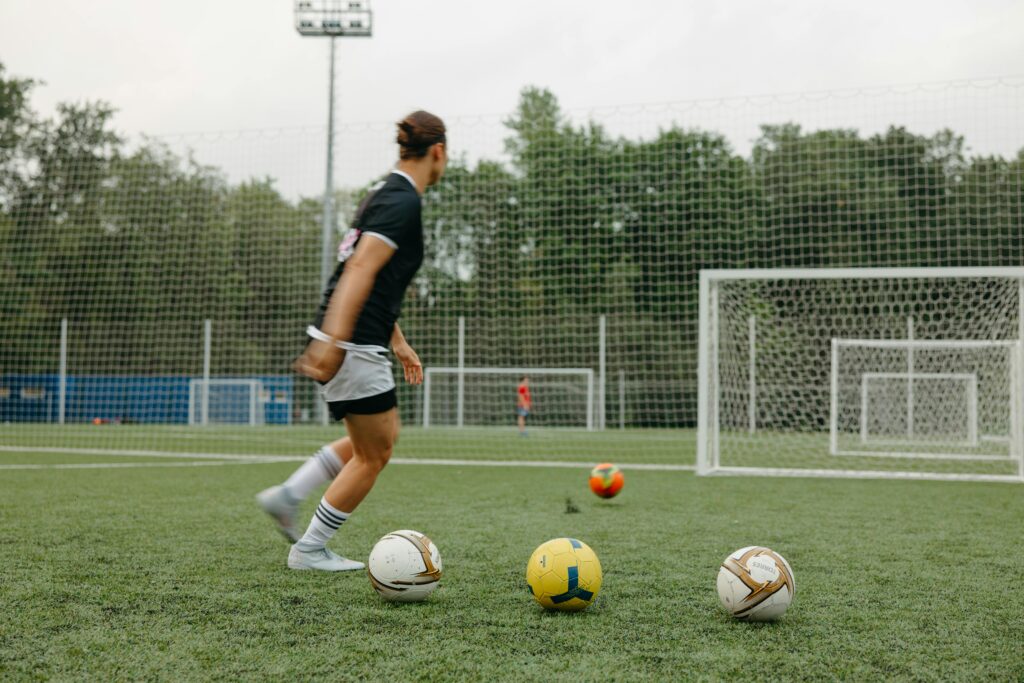
Strikers face relentless pressure: teammates, coaches, and fans expect goals. Miss one sitter, and self-criticism floods in (“I can’t believe I blazed that over”). Mindfulness for strikers means tuning into your inner world—thoughts (“Don’t mess up”), emotions (anxiety, excitement), and bodily signals (rapid heart rate, tight calves)—so you can recognize tension early and reset before stepping up for your next chance.
Click Here to know why mindfulness plays important rrole in sports.
2. The Benefits of Mindfulness for Strikers

2.1 Precision Under Pressure
A brief breathing ritual before a penalty or one-on-one run calms nerves, helping you place shots with surgical accuracy—just as Mohammed Salah credits his pre-kick breathing pause for his spot-kick success in the Premier League.
2.2 Recovery from Missed Chances
Instead of dwelling on a missed opportunity, a 5-second body scan acknowledges frustration (“I feel heat in my chest”) and shifts focus back to the next play—preventing a single miss from snowballing into mental block.
2.3 Enhanced Game Awareness
Mindful scanning—shifting attention from your feet to the ball trajectory, defender positions, and teammate runs—keeps you present, so you capitalize on half-chances that instinct alone might overlook.
How do all football players concentrate on the game. Click here to know more
3. Practical Mindfulness Techniques for Strikers

3.1 The “Pre-Shot Breath” Ritual
Before each shot, inhale for four counts, exhale for four—feeling your feet under you and the ball at your instep. This micro-practice grounds your attention and steadies the leg swing.
3.2 Sensory Anchoring Drills
During finishing drills, focus on one sensation per repetition: the thud of the ball, the vibration in your toes, or the sound of your laces. This anchors your mind to the present action and prevents wandering thoughts.
3.3 Emotional Labeling Between Touches
When anxiety flares—“What if I scuff this?”—silently label it “anxiety” and bring attention back to the ball and the target. This nonjudgmental naming defuses emotional spikes.
3.4 Visualization for Set Pieces
Before free-kicks or penalties, close your eyes for 30 seconds and vividly imagine your perfect run-up, foot-to-ball contact, and ball flight into the net. Engaging all senses primes neural pathways for real-world success.
3.5 Post-Match Gratitude Reflection
After the final whistle, jot down one positive outcome—an assist, a well-timed run, or even a learning moment from a missed shot—to balance self-critique with encouragement.
How to recover quickly from a sports injury. Click here to know more.
4. Real-Life Examples
- Case Study: Sunil Chhetri: Known for his calm penalties, Chhetri practices a two-breath pause before stepping up—crediting this mindfulness for strikers technique for converting high-pressure spot-kicks.
- Pro Insight: Jeje Lalpekhlua: In training, Jeje uses sensory anchoring—focusing on the ball’s texture and sound on each volley—to maintain sharpness even after hundreds of repetitions.
Q&A Section
- Q: How long do these mindfulness routines take?
A: Micro-practices range from 5–30 seconds, fitting seamlessly between drills and match moments. - Q: Will pausing for mindfulness slow my reaction time?
A: No—brief resets clear mental clutter, often speeding up instinctual responses. - Q: Can I use these methods in team training sessions?
A: Absolutely—coordinate with coaches to integrate pre-drill breath rituals or sensory anchoring cues. - Q: What if mindfulness makes me overthink?
A: Keep practices ultra-brief and task-focused—label distractions, then swiftly return to the ball. - Q: How soon will I notice improvements?
A: Some calm appears immediately; sustained gains in shot accuracy and resilience often manifest within 2–4 weeks.
FAQ Section
- Do I need special training?
No—techniques are self-guided. A brief workshop can help, but isn’t required. - How do I remember to practice?
Anchor to natural cues: ball placement, referee whistle, or coach’s command. - Can youth strikers use this?
Yes—simple breath pauses and sensory drills benefit U-14 and above. - Will mindfulness help with injury recovery?
Body scans can detect tension early, prompting timely stretches that prevent strains. - Is group practice possible?
Teams can start sessions with a 10-second collective breath, enhancing cohesion and focus.
Friendly Closing Message
Mindfulness for strikers isn’t about overthinking every touch—it’s about turbocharging your natural instincts with calm precision and resilience. By weaving micro-practices—Pre-Shot Breaths, sensory anchors, and quick emotional labels—into training and matches, you’ll not only sharpen your finishing but also build a mindset that thrives under pressure. Give one technique a try in your next session, and watch how presence transforms your game—one goal at a time. ⚽🧘♂️✨
Pingback: Mindful Recovery for Footballers: Sleep, Nutrition & Injury Rehab That Actually Work - Calm Within Minutes